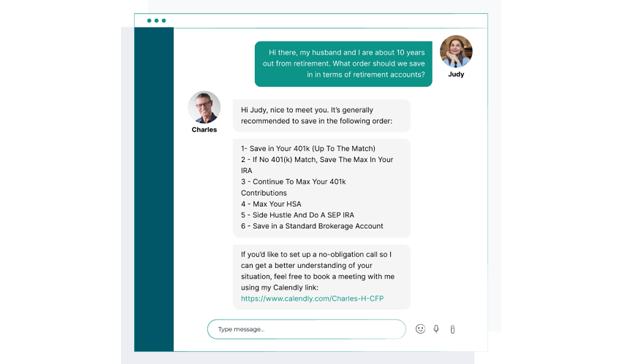

It is possible to open and utilize both 401(k) and Roth IRA at the same time. Before understanding how to manage both a 401(k) and Roth IRA, it is helpful to understand the features of a 401(k) and a Roth IRA. Have a financial question? Click here. A 401(k) is a type of retirement savings plan which allows employees to save for retirement on a tax-deferred basis. The IRS sets a limit to how much an employee can contribute to their own 401(k). In 2025, employees can contribute up to a maximum of $23,500 ($23,000 in 2024), with an additional $7,500 in catch-up contributions for employees age 50 and older. Employers can match a percentage of their employees' contributions, up to certain limits. For example, if a company offers up to a 50% match, if an employee contributes $10,000 into his own 401(k), then the company would contribute another $5,000 at the most. It is important to note that employer 401(k) match programs vary by company. Check your company's specific plan for details. A Roth IRA is an individual retirement account that allows individuals to save for retirement on a tax-deferred basis. Individuals who are interested in the Roth IRA are not taxed at the time of deposit but are later taxed upon withdrawal. The primary benefit of a Roth IRA is that your account grows tax-free until you withdraw the money. The main difference between a Roth IRA and a 401(k) is that contributions to a Roth IRA are made on an after-tax basis, while contributions to 401(k) plans are pre-tax (you don't pay taxes now). Additionally, contributions to a Roth IRA are not limited by your entire income like the 401(k) plan. For example, if your earned income is $75,000 and you choose to contribute $18,000 of that income into your 401(k), then the employer would match 50 percent of the contribution up to $18,000. If your earned income is too high to allow you to contribute the maximum amount allowed into your 401(k), then you are not eligible for a Roth IRA at all. To maximize retirement savings, contribute at least up to the limits for both a 401(k) and a Roth IRA, if eligible. For 2025, the 401(k) contribution limit for employee deferrals is $23,500 ($23,000 in 2024). If you are age 50 or older, you can contribute an additional $7,500 in catch-up contributions, for a total of $31,000. The Roth IRA contribution limit for 2025 is $7,000 ($6,500 in 2024) for individuals under 50 and $8,000 ($7,500 in 2024) for individuals age 50 or older. Roth IRA eligibility is based on your modified adjusted gross income (MAGI), and higher income earners may have their contributions limited or phased out. If your employer offers a 401(k) match, contribute at least enough to receive the full match, as it's essentially free money. Consider your investment goals, risk tolerance, and time horizon when deciding how to allocate your contributions between a 401(k) and a Roth IRA. Both a 401(k) and a Roth IRA can be great retirement planning tools. However, in order to maximize the benefits of both plans, individuals should understand how they work and how much to save into each account if their income is high enough for them to have access to both accounts. In order to do this, it may be helpful to work with a financial advisor who can help an individual understand his/her options and develop a comprehensive retirement savings strategy that is best suited for their particular needs.What Is a 401(k)?
What Is a Roth IRA?Maximizing Both Roth IRA and 401(k)
The Bottom Line
Opening and Contributing to Both 401(k) And Roth IRA FAQs
The primary advantage of a Roth IRA is that its funds can be withdrawn tax-free later in life. This differs from the traditional IRA, where contributions are tax-deductible upfront, but any withdrawals are taxed at ordinary income rates.
A person can contribute to both a Roth IRA and an employer-sponsored 401 (k).
Withdrawals on earnings can be made at any time. Pre-59 ½ penalties do not apply to this account.
No, you can only have one type of IRA at a time.
A qualified withdrawal includes any funds being withdrawn from your account for reasons including, but not limited to, purchasing your first home, higher education expenses for yourself or a dependent, disability, or death.
True Tamplin is a published author, public speaker, CEO of UpDigital, and founder of Finance Strategists.
True is a Certified Educator in Personal Finance (CEPF®), author of The Handy Financial Ratios Guide, a member of the Society for Advancing Business Editing and Writing, contributes to his financial education site, Finance Strategists, and has spoken to various financial communities such as the CFA Institute, as well as university students like his Alma mater, Biola University, where he received a bachelor of science in business and data analytics.
To learn more about True, visit his personal website or view his author profiles on Amazon, Nasdaq and Forbes.